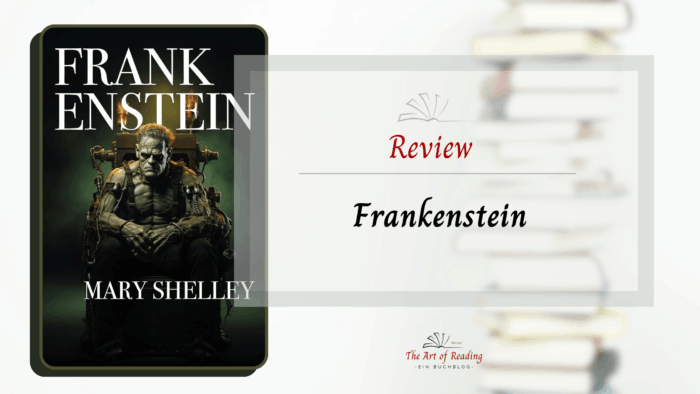
A Groundbreaking Classic That Didn’t Quite Electrify Me
There are some books whose reputation arrives in the room long before the book itself does, and Frankenstein by Mary Wollstonecraft Shelley is certainly one of them. First published in 1818 and often considered one of the earliest works of science fiction Science Fiction, häufig auch als SF oder Sci-Fi bezeichnet, ... More horror
 Horror ist ein Teilbereich der Phantastik, dessen zentrales ... More, its influence on literature and popular culture is undeniable. Unfortunately, being able to appreciate what a novel accomplished historically doesn’t automatically mean I’m going to love reading it.
And that is exactly where my 3.5-star rating comes from.
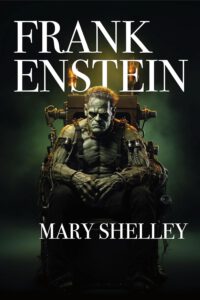


Frankenstein by Mary Wollstonecraft Shelley
Genre
 Der Begriff Genre bezeichnet eine Kategorie oder Gattung von... More: Classics, Adult, Horror, Science Fiction, Suspense
 Published on 28. May 2024 by Aeons Classics
Initial Release: 01. Jan 1818
Pages: 248
Format: Kindle Edition
ISBN-13: 9781998114221
ASIN: B0CBPPPGMX
Language: English
Source: Amazon
Link to Goodreads
My rating: |
In a dark laboratory shrouded in mystery and secrets, a young scientist defies the laws of nature and embarks on a perilous quest for immortality. Driven by ambition and haunted by a relentless curiosity, Victor Frankenstein hurls himself into a realm where life and death blur into a macabre dance.
Assembling body parts stolen from the grave, he stitches together a grotesque being, an abomination that awakens with a spark of electricity. But what he creates is far more than he bargained for—a creature with a mind as tormented as its disfigured form.
Frankenstein, a timeless tale of science and morality, explores the boundaries of human knowledge and the weighty consequences of playing god. As the creature grapples with its existence and yearns for acceptance, Frankenstein must confront the horrors he has unleashed upon the world.
From the icy peaks of the Swiss Alps to the mist-laden streets of 19th-century Europe, this Gothic masterpiece delves deep into the darkest corners of the human psyche. Mary Shelley's enduring classic delves into themes of love, loneliness, and the search for identity, challenging our understanding of what it means to be human.
With its atmospheric prose and haunting narrative, Frankenstein continues to captivate readers across generations. Dive into the depths of this chilling tale and discover the tragic consequences of tampering with life's eternal mysteries. Will Victor Frankenstein find redemption, or will his creation become the instrument of his ultimate downfall? The answers lie within the pages of this timeless masterpiece.
Buy here: Amazon*
Find the Author: Goodreads
Icons made by Freepik from www.flaticon.com

Frankenstein ♦ Mary Wollstonecraft Shelley
A Review
Opinion
Going into Frankenstein, I wasn’t expecting to be completely unfamiliar with the story. Victor Frankenstein and his creation have become so deeply embedded in popular culture that you basically know the bones of the tale even if you’ve never opened the book. Movies, television shows, adaptations, retellings, Halloween decorations… Frankenstein’s monster is everywhere.
Perhaps that’s also one reason the novel didn’t creep me out at all.
I can imagine how extraordinary and disturbing the concept must have seemed to readers in 1818. A scientist obsessed with discovering the secrets of life, assembling a body from the dead and ultimately succeeding in bringing his creation to life? For its time, that’s a wonderfully dark and unsettling idea. Reading it in the 21st century, however, when we’ve had more than two hundred years of increasingly gruesome horrorHorror ist ein Teilbereich der Phantastik, dessen zentrales ... More and increasingly ambitious science fictionScience Fiction, häufig auch als SF oder Sci-Fi bezeichnet, ... More, the shock factor has understandably faded.
Can We Get to the Monster Already?
My biggest struggle was actually everything leading up to the creation of the creature.
I was waiting for Victor to finally get to his experiment while the story seemed determined to wander through his life beforehand at a leisurely nineteenth-century stroll. I understand why that background is there. We need to see Victor‘s fascination with science and how his obsession develops. But knowing that didn’t make those pages any more exciting for me.
Then we finally reach the creation of the monster, and that was the part I had been waiting for.
The idea of Victor becoming so consumed by his work that he ignores everything around him, only to recoil from the very thing he desperately wanted to accomplish, is fascinating. He wants to conquer death, succeeds in creating life, takes one look at the result and essentially realizes that perhaps this whole playing-God business wasn’t his brightest idea.
That conflict is far more interesting to me than the lengthy build-up.
The Classic Problem: The Language
Then there is my recurring battle with classics: the writing style.
I know Frankenstein was published in 1818. I don’t expect Mary Shelley to suddenly start writing like a modern fantasy Fantasy ist ein Teilbereich der Phantastik und leitet sich v... More or horrorHorror ist ein Teilbereich der Phantastik, dessen zentrales ... More author. But knowing why the language feels old-fashioned doesn’t mean I have to enjoy reading it.
And I didn’t.
At times, the prose felt so formal, elaborate and drawn-out that my brain was practically begging everyone to remove the literary stick from their ass and get on with it. 😂 It’s beautifully written from a historical and literary perspective, I’m sure, but beautiful doesn’t necessarily equal entertaining.
For me, that distance created by the language also weakened the horrorHorror ist ein Teilbereich der Phantastik, dessen zentrales ... More. Instead of feeling trapped inside this increasingly disturbing situation, I often felt like I was observing everything through several layers of very ornate nineteenth-century curtains.
More Tragedy Than Horror
What I did find interesting was how different the actual story feels from the simplified version of Frankenstein that popular culture has created.
This isn’t merely a story about a mad scientist and a terrifying monster. It’s also about ambition, responsibility, isolation and rejection. Victor creates life but isn’t prepared to accept responsibility for what he has done, while the creature has to exist in a world that judges him immediately by his appearance.
That raises a much more interesting question than whether the monster itself is frightening: Who is actually responsible for the horrorHorror ist ein Teilbereich der Phantastik, dessen zentrales ... More that follows?
And this is where I can understand why the novel has survived for more than two centuries. The frightening element isn’t necessarily the creature shambling around in the darkness. It’s Victor‘s ambition, his refusal to properly confront the consequences of his actions and the devastating loneliness experienced by the being he created.
Conclusion
Frankenstein by Mary Shelley is one of those classics I respect more than I actually enjoyed.
The concept is remarkable when placed in the context of 1818, and I absolutely understand why Shelley‘s novel became such an influential work of science fictionScience Fiction, häufig auch als SF oder Sci-Fi bezeichnet, ... More and gothic horrorHorror ist ein Teilbereich der Phantastik, dessen zentrales ... More. There are fascinating ideas beneath the surface, particularly concerning scientific responsibility, loneliness, identity and humanity’s desire to push beyond natural boundaries.
But as a modern reader, I simply didn’t find it scary, and the slow beginning combined with the old-fashioned language made parts of the novel genuinely tedious for me.
Once Victor‘s experiment finally came together, my interest increased considerably, and I enjoyed exploring the consequences of his creation far more than the lengthy road leading there. Still, historical significance alone isn’t enough to turn a book into a personal favorite.
So, 3.5 stars it is: groundbreaking for 1818, fascinating in its influence and themes, but for this 21st-century reader, the monster wasn’t nearly as frightening as having to fight my way through some of that prose.
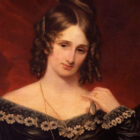
About Mary Wollstonecraft Shelley
diese Rezension wurde auch hier veröffentlicht:
| Goodreads | Amazon |
| StoryGraph |
Views: 2